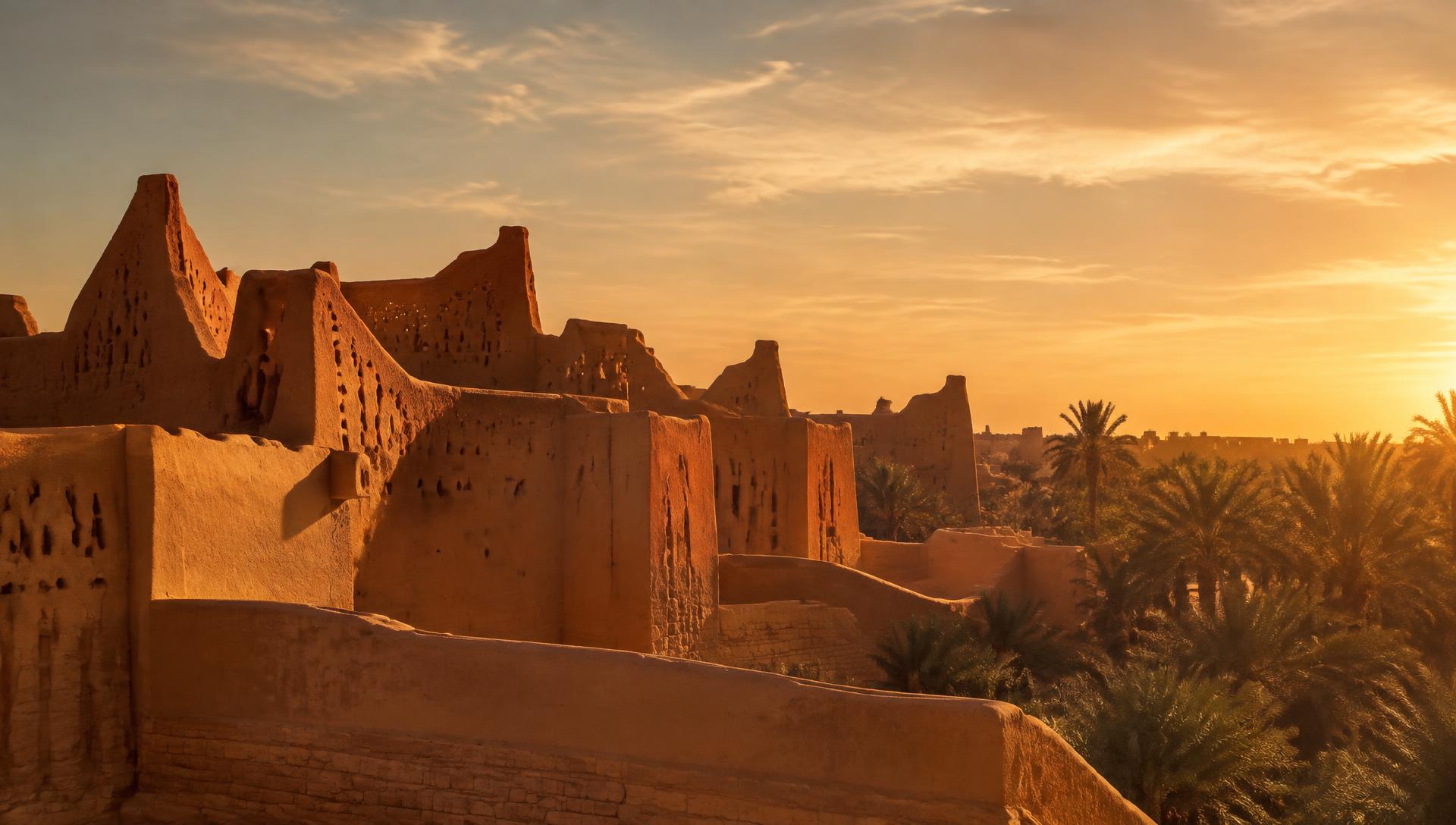

Diriyah · Najd
Saudi Heritage Atlas
A living atlas of Saudi Arabia — its history, people, landscapes, architecture, culture, and memory.
Interactive atlas
One land, many regions
Schematic map — boundaries approximate
Saudi Arabia through time
From the Palaeolithic to today
c. 85,000 years ago
Early Homo sapiens at Al-Wusta
A fossil finger bone found at Al-Wusta in the Nefud desert is among the oldest directly dated Homo sapiens fossils outside Africa and the Levant, from a time when the region held freshwater lakes.
Neolithic onward
Rock art of Jubbah and Shuwaymis
Thousands of petroglyphs depicting humans and animals record millennia of life in the Hail region. Inscribed on the UNESCO World Heritage List in 2015.
6th c. BCE
Nabonidus at Tayma
Babylonian sources record that King Nabonidus spent around a decade at the oasis of Tayma, a major station on the incense routes.
1st c. BCE – 1st c. CE
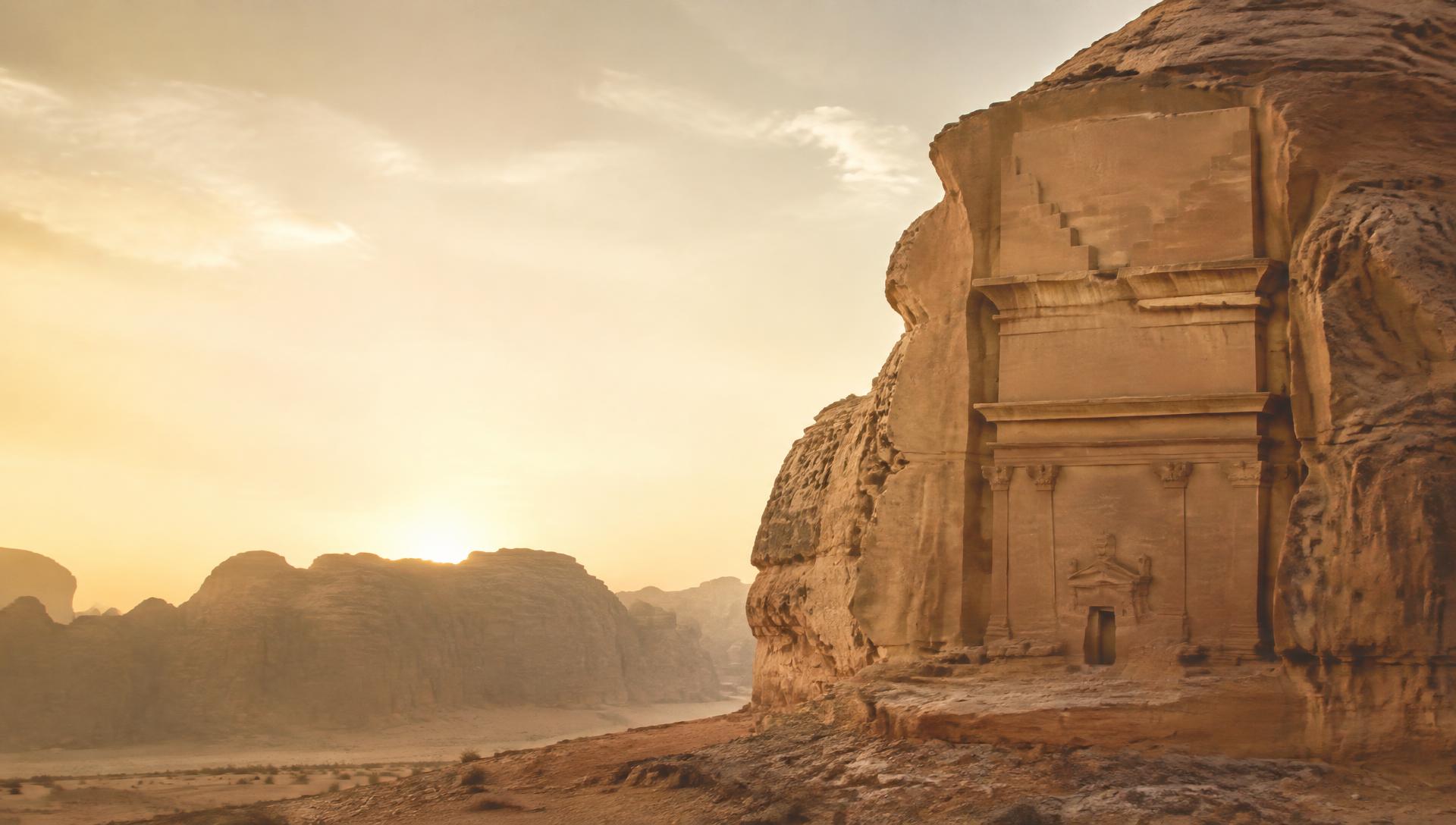
Nabataean Hegra
The southernmost major Nabataean city, with over a hundred monumental rock-cut tombs. Saudi Arabia's first UNESCO World Heritage Site (2008).
622 CE
The Hijra to Madinah
The migration of the Prophet Muhammad from Makkah to Yathrib (Madinah) marks the beginning of the Islamic Hijri calendar.
1517
Ottoman suzerainty over the Hijaz
Following the Ottoman conquest of Mamluk Egypt, the Sharifs of Makkah recognised Ottoman authority over the Hijaz.
Featured heritage
Thirteen provinces