Unification · Riyadh
Masmak Fortress
A compact mud-brick fortress in the heart of old Riyadh, Masmak is closely associated with Abdulaziz bin Abdulrahman Al Saud’s recapture of the city in 1902 and the long campaign that led to the unification of Saudi Arabia.
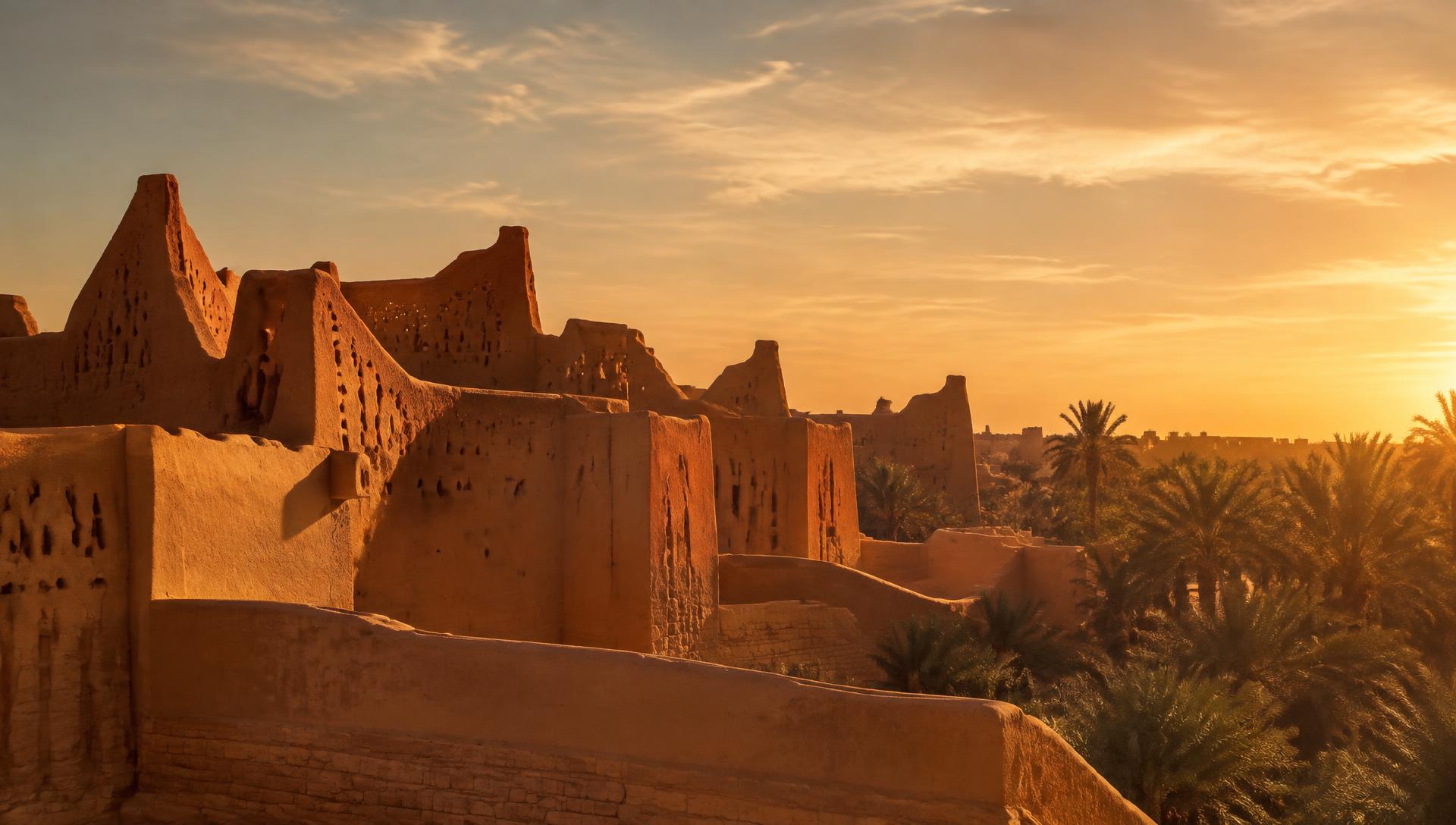
A stronghold in old Riyadh
Masmak—its name is commonly understood to refer to a strong, thick or fortified building—was constructed in the late 19th century. At the time, Riyadh was a walled oasis town of earthen houses, gardens, mosques and markets rather than the expansive capital seen today.
The fortress stood near the centre of political life. Its enclosure could secure stores and arms, accommodate a garrison and project authority over the surrounding town. The building’s survival provides a rare physical link to Riyadh before its rapid 20th-century transformation.
The recapture of Riyadh
Before dawn on 15 January 1902, Abdulaziz bin Abdulrahman Al Saud entered Riyadh with a small group of companions. After approaching from Kuwait and waiting near the oasis, the party moved into the town and attacked the fortress as its governor emerged.
The successful recapture restored Al Saud rule in Riyadh. The episode is often presented as a dramatic turning point, but it was the opening of a much longer political and military process. Over the following three decades Abdulaziz consolidated authority across Najd, Al-Ahsa, the Hijaz and other regions before the Kingdom of Saudi Arabia was proclaimed in 1932.
Architecture of defence
Masmak is built primarily of mud brick, the adaptable material that defined traditional construction in central Arabia. Its high, largely blank outer walls form an irregular enclosure reinforced by four cylindrical corner towers. Narrow openings allowed observation while limiting exposure from outside.
The heavy palm-wood entrance leads through a defensive passage into an open courtyard. Around it are rooms associated with reception, residence, storage and worship. A well within the enclosure supported the occupants, while roofed spaces and thick walls moderated summer heat.
The gate has become one of the fortress’s most recognizable elements. Its robust construction and the historic action around the entrance make it both an architectural feature and an object through which the events of 1902 are remembered.
From fortress to museum
As Riyadh expanded and construction methods changed, Masmak outlived its original defensive role. The fortress was repaired and adapted as a museum devoted to the recapture of Riyadh and the unification period.
Historic photographs, maps, models and objects help place the building within the former walled city. Yet the most important exhibit is the architecture itself: visitors move through the gate, courtyard, towers and rooms at the scale experienced by those who occupied the fortress.
A national place of memory
Masmak’s significance extends beyond its fabric. In public memory it marks the return of Abdulaziz to his ancestral capital and the beginning of the events that shaped the modern state.
That symbolic role makes careful interpretation essential. The fortress tells a focused story about Riyadh in 1902, while the broader unification unfolded across many regions and communities over thirty years. Reading the site at both scales connects one landmark to the Kingdom’s larger history.
Sources
- 1.King Abdulaziz Foundation for Research and Archives (Darah) — Darat al-Malik AbdulazizArchive